
The Seeds Poe Planted in Paris
A Reader’s Guide to the Stories Hiding in The Year of Shadows
27 November 2025 ~ 3 min read
Here’s the fact that started everything: Edgar Allan Poe set The Murders in the Rue Morgue in Paris. Not Baltimore, not Richmond, not any of the American cities where he actually lived—Paris. A city he dreamed of visiting but, as far as we know, never reached. So when I began writing The Year of Shadows, I asked: what if he did reach it? What if the reason Poe’s most famous detective story takes place on a Parisian street is that he’d actually walked those streets himself?
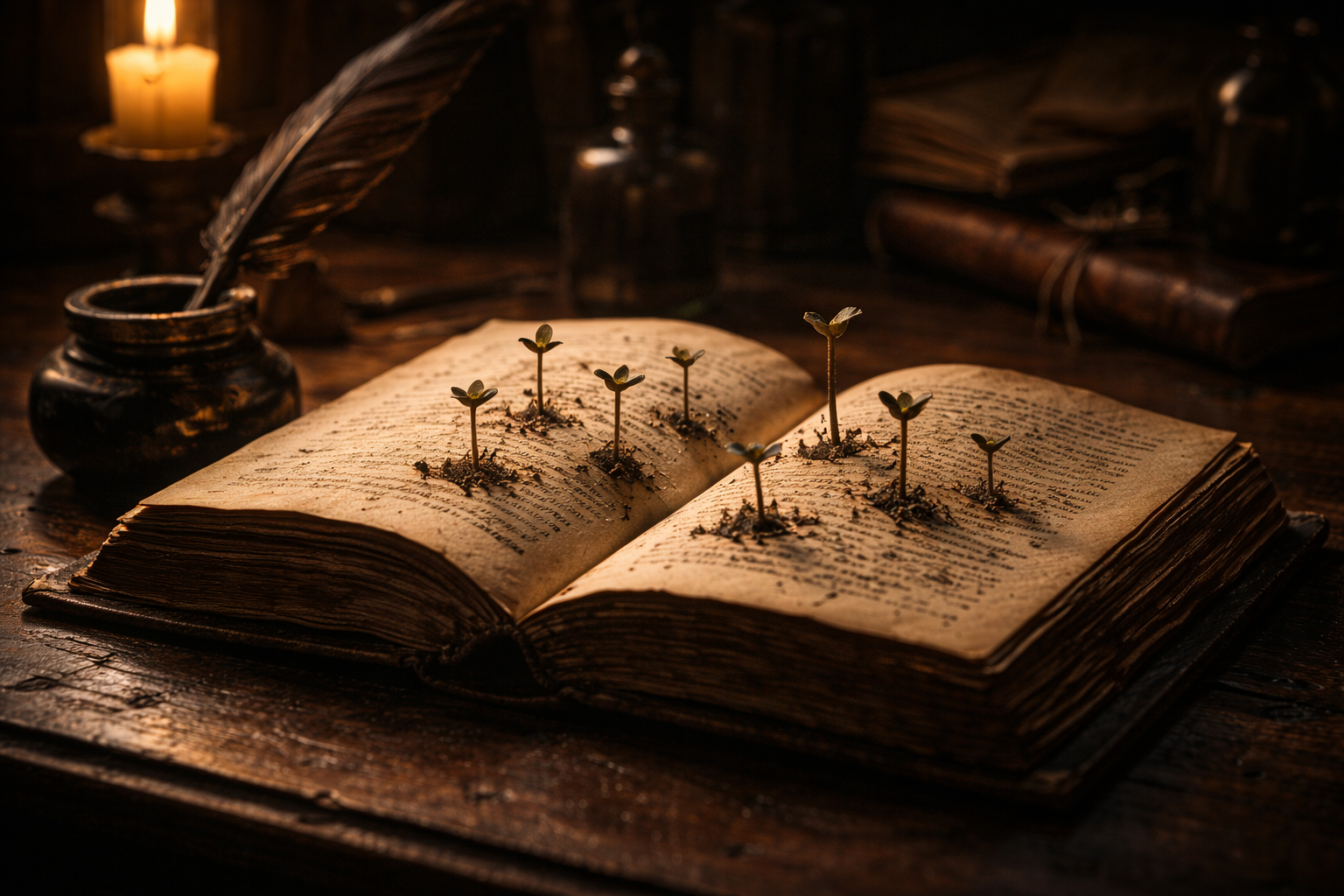
That question opened a door I couldn’t close. Because once Poe is in Paris—a young, observant, morbidly curious writer absorbing everything around him—you start to see how many of his future works could have their roots in that single year. The novel is full of these seeds: moments where something Edgar sees, hears, or experiences in 1830 Paris plants the idea for a story he’ll write years later in America. Some are obvious. Some are buried. All of them are there for readers who know their Poe.
I won’t give away how they appear in the story—that’s half the fun—but here’s a taste of what’s hiding in the novel. The locked room. The purloined letter hidden in plain sight. A phrase—“like a vulture’s eye”—that will one day open one of the most terrifying stories in the English language. A body found near the Seine that echoes through decades. A house that seems to collapse inward on itself. A portrait that appears to drain the life from its subject. A message sealed in a bottle. A word—just one word, spoken by a bird—that becomes the most famous refrain in American poetry.
And then there’s “Lenore.” Readers of The Raven know the name as the narrator’s lost love—the woman mourned in that dark chamber while a raven speaks its relentless verdict. In The Year of Shadows, the name takes on a different life entirely, one that connects Edgar’s heart to his art in ways I’ll let the novel reveal.
What I loved about planting these seeds was the constraint. I couldn’t force them. Each one had to arise naturally from the story—from the crimes Edgar investigates, the people he meets, the streets he walks, the grief and wonder of being young and far from home. If a seed felt planted rather than grown, I pulled it out. The ones that survived are the ones that earned their place in the narrative first and became Poe references second.
There are more than thirty seeds scattered across the novel’s seventy chapters. I’ve named a handful here. Some readers will catch them all on the first pass. Some will surface on a second reading, when you know what you’re looking for. A few, I suspect, will spark arguments—and I’m perfectly fine with that.
Poe once wrote that the best stories are the ones where every element serves the whole, where nothing is accidental and everything resonates. I tried to build this novel the same way. Every seed points forward to a work Poe will one day write, and backward to a moment he actually lived—or, in this case, might have lived—in the shadows of 1830 Paris.
~ Liam