
Novels
Long-form fiction shaped by music, myth, history, and consequence.
Some stories are written to be read. Others are written to linger.
The Image
Two cities, one year, one glass case—and a book that declines to say which city is real.
Description
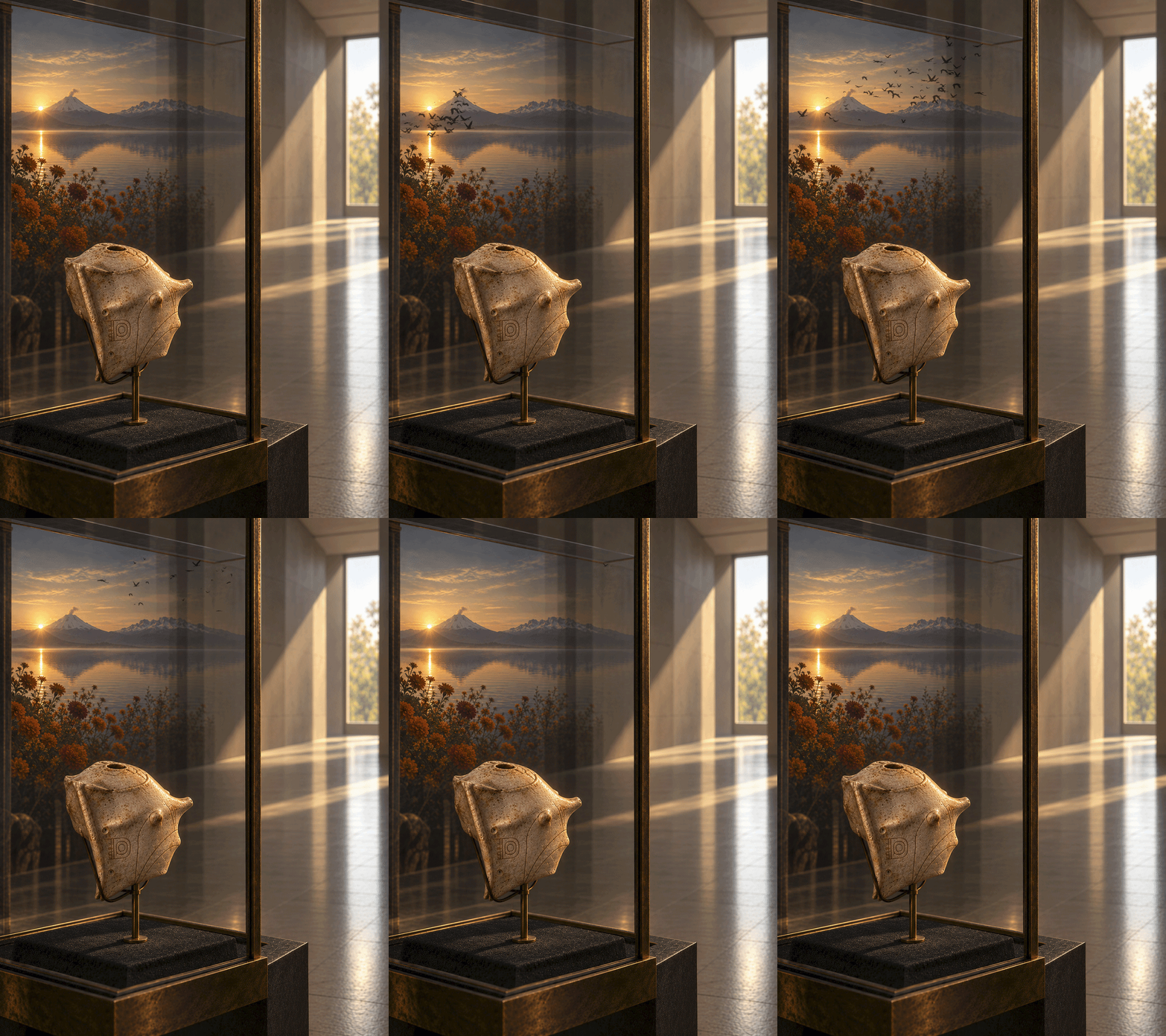
Mateo Reyes builds the mounts a museum’s treasures rest on. During the reinstall of LACMA’s ancient Americas gallery he spends nine days on the cradle for a carved conch five centuries old, and on the night it goes into its case, alone in the dark, he lifts it and sounds it—one long note that fills the building from every wall. He expects to be fired. Instead his life turns golden: flowers he didn’t ask for, food before he’s hungry, a fellowship, four attentive women at the four edges of the museum grounds. A technician, Mateo files what he can’t explain, and when he draws the file, every good thing of the year stands in a ring around one glass case. Sahagún’s Florentine Codex tells him what the ring is. In the same world, described a second time, a flower-keeper in Tenochtitlan named Citlali is given to a god’s living image for his last twenty days—and comes to love him, and understands why she must not save him.
Completed • 72,000 words
Melisma
Five centuries, five exiles, one wordless song — and not one of them knows they carry it.
Description
Four departures, five centuries, one wordless lament—and not one of them knows they carry it.
In the last week before the expulsion of 1492, a cantor’s son in Toledo hears his grandmother sing a wordless phrase over his mother’s body—a melody older than any language that could claim it. Over the next five centuries it rises again at the moment of forced departure: in a Morisca widow crossing to Tetouan without her daughter, in the last keener of a famine village in Connacht, in a vintner leaving Etna for Brooklyn—each carrying it without knowing, each passing it to someone who will never recognize it. Framing them is Claire, a dry, funny woman in 2026 who has never sung in any room in her life, whose ancestry test returns not a homeland but a scatter of strangers, and who cries at a great-uncle’s funeral without knowing why—while something rises in her throat to answer the voice at the front of the chapel, and she closes it, the way a person swallows in a quiet room.
Completed • 93,000 words
The Anatomy of Shadows
Paris, 1830. Poe. Berlioz. The year that made them.
Description
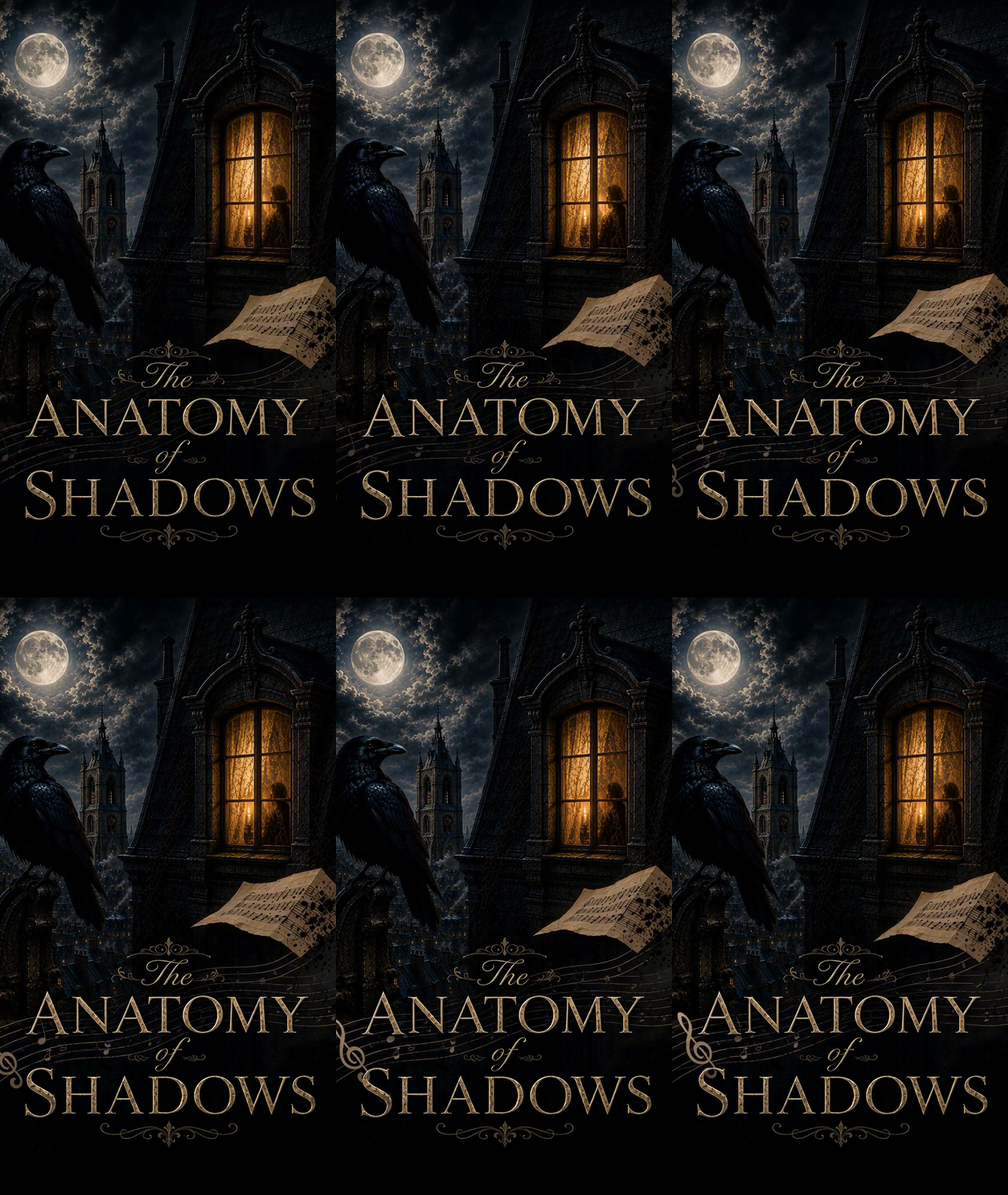
What if Edgar Allan Poe had made it to Paris? In 1830, a disgraced American student traveling under a false name takes rooms on the Rue Saint-Jacques with a renegade medical student named Hector Berlioz. Neither is anyone yet. Over one revolutionary year—the year of the Symphonie Fantastique—Paris gives Poe everything he will spend the rest of his life writing: the raven, the locked room, the Rue Morgue, and Lenore, here a woman physician named Eleanor Morel who keeps a private ledger of the city’s unexplained dead.
Edgar’s gift for reading death draws him into the city’s strangest cases and into Eleanor’s orbit. Fame costs him: the July Revolution burns his residency file out of the archives, a jealous officer and a vengeful minister turn his usefulness into danger, and when the impossible murders in the Rue Morgue hand him his greatest triumph, the truth cannot be printed—and the man who solved it is given twenty-three days to leave France. Hector’s year runs in counterpoint: a Prix de Rome won against a rigged jury, a symphony premiered in defiance of the Conservatoire, and an Irish actress named Henriette Smithson who promises to be in Paris when Rome lets him go.
Completed · 105,000 words
Three Moons
Two envelopes stand unopened on a shelf. The winter has the rest.
Description
On the coldest night of the year, in the Hunger Moon, a dream sends her nephew’s voice through the snow, and Colleen—the last sugar maker on a road of sold farms—walks out without banking her fire to find him. She doesn’t find him. A whiskey jack named for the Cree trickster Wisakedjak follows from the first tree, the winter steers her toward a dead village, and her sister Angela appears unchanged by the years, leaving no footprints in the snow. Between the chapters of that one night runs the last sugar season, told in scenes and in her nephew’s notebook, which the reader has and Colleen won’t open—the two letters on her shelf have been holding the truth all year.
Completed • 70,000 words


The Cosmic Janitor
An Apology to the Cosmos
He sang a hole in the universe. Then he dropped the screwdriver.
Seán O’Sullivan sweeps the floor of Tigh Ceoil, the House of Music, a pub in Cork that has always been slightly more than a pub. On the winter solstice of 1999 he sings Danny Boy and the hearth opens onto stars; a woman wearing the face of Grace O’Malley offers him a job. Three months later he drops his only tool—it looks like a screwdriver—through the Big Bang, and it tears seventeen holes in history on the way down. He goes after them with his father’s broom and a partner from the Department of Universal Aesthetics who used to be a nebula and is learning what feet are for. Every repair costs something: in Vienna he gives Beethoven the memory of a song his mother taught him, and never gets the melody back. And every repair is watched, because the Devil—bound to Earth since a war nobody remembers correctly—has worked out that mended things remember the hand that mended them, and that all of Seán’s roads run to one door: his parents’ pub.
COMPLETED • 98,000 WORDS • A stand-alone novel.
The story continues in two completed sequels, The Morrígan’s Game and The Cosmos Answers.
The Morrígan's Game
When the woman who was once a nebula begins dissolving back into starlight, the Devil offers Seán O’Sullivan a Faustian bargain. But descending through a modernized Hell—where influencers create content for zero followers and demons named Craig correct grammar for eternity—Seán discovers this was never the Devil’s game. The ancient Irish goddess Morrígan is teaching him the hardest lesson love knows: sometimes holding on tight means learning to let go.
The Cosmos Answers
The Devil returns, wielding a sentient Map his sister Serenity built before the War in Heaven, and launches his final assault on reality by splintering Cork into seventeen versions of itself across the dimensions—Viking Cork, Butter Cork, Academic Cork, and more. He expects division to lead to destruction. He underestimates the Corks’ stubborn refusal to unmake themselves during Wednesday quiz night. As the cosmos poses its ultimate question—whether harmony or entropy shapes existence—Seán must conduct the symphony of infinite Corks, knowing that the answer might mean sacrificing everything he’s spent three books learning to love.