
Cork Is a Character
Why the Real Capital of Ireland Became the Center of the Cosmos
10 January 2026 ~ 3 min read
The Cosmic Janitor Trilogy is set in Cork, Ireland. Not Dublin. Not Galway. Cork. And people sometimes ask why. The answer is a taxi driver named Pat Winning.
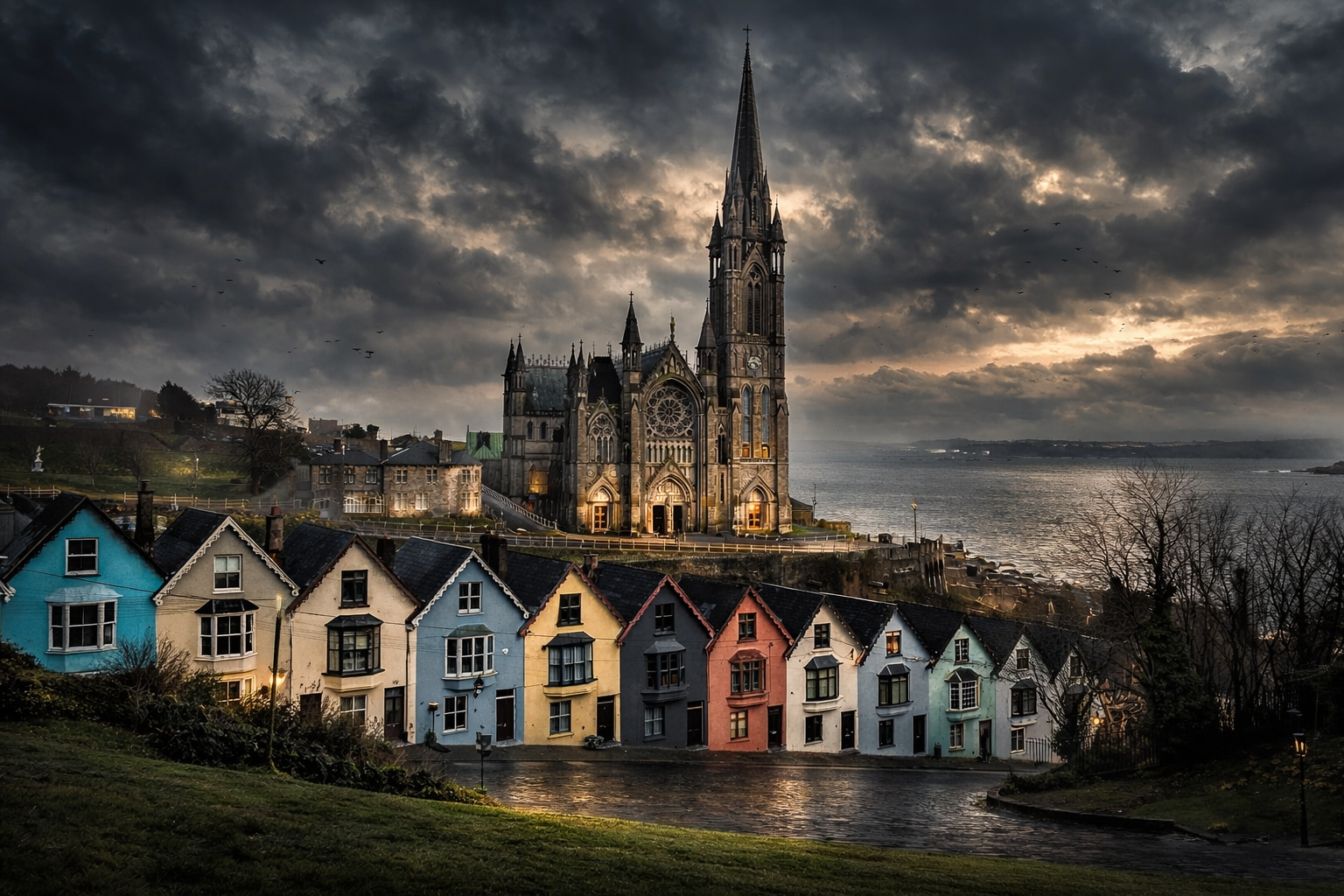
My wife and I traveled to Cork by train with no particular agenda—just the Midleton Distillery, some pubs, the Butter Museum, and a general desire to slow down and spend time with locals. We’d heard Cork had a spirit about it. What we didn’t expect was how quickly that spirit would grab us by the collar and refuse to let go.
The first thing you learn about Cork is that it is not Dublin, and Cork people will make sure you know it. They don’t drink Guinness—they drink Beamish. They sell T-shirts that say “Cork is the Real Capital of Ireland.” There’s a rebellious streak running through the place that isn’t performed for tourists—it’s just how they are. Cork has opinions about Cork, and those opinions are loud, affectionate, and non-negotiable. If you tried to tell Cork that Dublin was the center of the universe, Cork would look at you with genuine pity and buy you a pint while explaining exactly why you’re wrong.
We hired a taxi to take us out to the Midleton Distillery. Our driver was Pat. He talked the whole way—stories, history, opinions—the real craic. When we arrived, we thanked him and asked about the best way to get back to Cork City after our two-hour tour. He gave us his card and his cell number. He got out of the cab and took photos of us in front of the distillery. We thanked him again and turned to go inside. That’s when he called us back. He told us he’d wait for us—no charge—and drive us back when we were done.
And he did. Two hours later, there was Pat, leaning against his taxi, ready with more stories for the ride home.
The next day, we needed a taxi to the train station. Our driver this time was James. We told him about Pat and the Midleton trip. James laughed. “That’s my fishing buddy,” he said. Then he looked at us in the rear view mirror and added: “Pat must have really liked you two. He doesn’t like many people—and sometimes not even me.”
How do you not set your novel there?
When I needed a city that could face down a cosmic apocalypse with stubborn good humor, Cork was the only choice. Not because it’s picturesque—though it is—but because Cork is the kind of place that would file an apocalypse as “pending” and carry on with quiz night. In the Trilogy, the Devil tries to destroy Cork by splitting it into seventeen dimensions, and every single version refuses to unmake itself because it’s Wednesday quiz night. That’s not something I invented. That’s something Cork taught me. This is a city that would respond to the end of the world with a strongly-worded letter and a pint of Beamish.
The seventeen Corks in the novel—Viking Cork, Butter Cork, Academic Cork, Musical Cork, and thirteen others—aren’t arbitrary. They’re the facets of a city that contains multitudes and knows it. Every version of Cork in the book is an aspect of something real: the history, the music, the commerce, the stubborn independence, the warmth that doesn’t advertise itself. Pat waiting two hours at the distillery for a couple of Americans he’d just met—that’s Cork. James knowing Pat’s fishing schedule and personality quirks—that’s Cork too. A city small enough that your taxi driver knows your last taxi driver, and generous enough to wait.
In The Cosmos Answers, when the universe itself asks “What’s the point?” Cork’s answer is: “Would you ever cop on?” Which roughly translates to: stop being so dramatic, have a pint, and be here with the people around you. Sometimes that’s the whole point.
Pat could have told you that.
~ Liam