
Stage & Screen
Stories written to be heard, seen, and inhabited.
Some stories demand voices, bodies, and breath.
The Dream Was Too Beautiful
A love that shattered convention and created a masterpiece
Description
Paris, 1827. A young medical student named Hector Berlioz abandons his studies to pursue music—a choice that enrages his family and leaves him penniless. Everything changes when he attends a performance of Romeo and Juliet at the Odéon Theatre. The Irish actress playing Juliet is Henriette Smithson—and Hector falls instantly, desperately, hopelessly in love with a woman who has never met him.
Unable to reach her, he pours his obsession into revolutionary music that shocks conservative Paris. A passionate affair with pianist Camille Moke offers a chance at happiness—until her mother arranges a “respectable” marriage. Isolated and heartbroken in Rome, Berlioz channels his anguish into a masterpiece: Symphonie Fantastique, a musical autobiography of obsession, despair, and imagined death.
At the December 1832 premiere, Henriette Smithson sits in the audience. As the symphony unfolds—its five movements tracing Berlioz’s obsession with an idealized woman—she slowly realizes: the music is about her. This man she never met has made her immortal.
Featuring Shakespeare performed within the play and Berlioz’s groundbreaking music as a central character, the drama asks: How far will we go for art? And what do we sacrifice in the pursuit of beauty?
Approximately 2 hours 45 minutes with intermission
Seeking theatrical representation (USA & UK)
The Janitor
How Bad Can a Good Time Be?
A comical ride through time and space
Description
The Janitor—what is it? Well, it is not about religion, politics, socioeconomics, or the newest world order. The intersection of good and evil with music, science, poetry, and art is explored as the cast grapples with temptation, jobs, bosses, and some pretty ridiculous advice.
Our anti-hero enters sweeping the stage with a broom, apologizing for something he won’t explain—but first, he’s going to tell us how it happened. And he starts at the VERY beginning: the CEO (Created Everything Originally) and the Big Bang. What follows is a journey through time and space that upends our views of creation, the universe, scholars, fairy tales, and even airline safety demonstrations.
Along the way, the Janitor encounters Leonardo da Vinci and a certain map, delivers music to the god Pan in Ancient Greece, channels his inner Poe through The Raven, travels the Silk Road with Marco Polo and Princess Kokachin, and outwits the Devil with the help of a simple Blacksmith. Through it all, he falls for Bubbles—a cosmic being learning to understand humanity—and discovers that everyone wants to build, but no one wants to do maintenance.
Featuring readings from the “Gospel according to Kurt Vonnegut” and a finale involving Saturn’s rings, the opera asks: after all, how bad can a good time be?
Premiered: El Camino College Center for the Arts

Extraordinary Tales in Music
A musical journey through the mysterious life of Edgar Allan Poe
Description
We hear from a young Edgar Allan Poe at the University of Virginia in 1826, just enrolled in literature classes, living in a small, barren apartment but excited about his studies. He takes us on his literary journey to visit the places he is reading about—and we discover what a wild and vivid imagination he has, starting in ancient Greece with the Odyssey of Homer.
Having trouble at the university (gambling and drinking debts), and in the spirit of Marco Polo, Poe decides to travel abroad. Since his letters to his fiancée have gone unanswered, he takes a trip to the land of his grandparents—Ireland. There, he will search for both his destiny and for a new love in the emerald island. He meets his Lenore.
But Poe’s time in Ireland comes to an end. Leaving, he tries desperately to persuade Lenore to join him. Unwilling to leave Ireland, she quotes the last line of his Dream poem and leaves him “alone on a weatherbeaten shore.”
Back in the USA, depressed and mourning the loss of her, Poe writes his latest poem—The Raven. Following a savage review, he decides he has had enough: “I will yield nothing to this critic Fortunato…I shall make war to the death.” His next story will be one of revenge—The Cask of Amontillado.
Symbolically, Poe has “chained up his critics” by leaving us so many masterful stories and poems across a full range of expression—from the heartfelt loneliness of A Dream Within a Dream, to the unrelenting loss, terror, and madness of The Raven and The Cask of Amontillado.
Awards
- Excellence in Music Awards, County of Los Angeles, City of Torrance (2019, 2020)
- Best Original Work, International Poe Festival (2020)
Premiered: El Camino College Center for the Arts
Odusseia
Homer meets Joyce in a Dublin pub
Description
The story of Odusseia (Odysseus) has been told by many writers since the time of ancient Greece. This work traces that journey through the voices of Homer, Virgil, James Joyce, and Dante—weaving classical epic with Irish literary tradition into a single musical voyage.
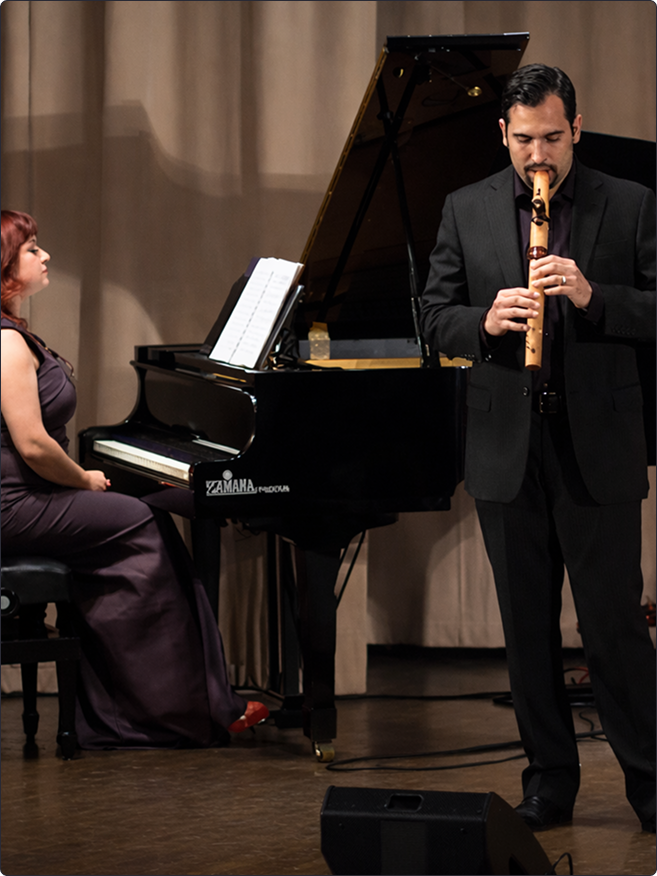
The Prologue opens with the voice of the Greek poet Homer through a wooden flute. The tale of the “man of twists and turns” unfolds through texts compiled from Homer’s Odyssey, Aeschylus’s Agamemnon, and Virgil’s Aeneid. Fire and Sea is a musical depiction of the storm sent to punish the Greeks on their voyage home, leading us to the Sirens—the women on the rocks who enchanted sailors with their songs.
For the encounter with the Sirens, the setting shifts to the Ormond Hotel in Dublin, drawn from James Joyce’s novel Ulysses. We enter the pub and concert room as Joyce’s character Leopold Bloom—who is, of course, Ulysses/Odysseus himself. The pub is filled with people eating and drinking and an ongoing Irish “session”—a free-form medley of songs emanating from singer and pianist. Joyce’s musical Sirens episode unfolds as a stream-of-consciousness labyrinth of humor, commentary, and musical quotes.
The piece ends with a quote from Dante’s Inferno as Bloom leaves the pub and the danger—spending too much time there—has passed.
Texts By
Performed internationally (Italy, Austria, Los Angeles)
Performance: International Music Festival, Padova, Italy
From the Letters of Edgar Allan Poe
His letters, his poems, his timeless works—brought to vivid life
Description
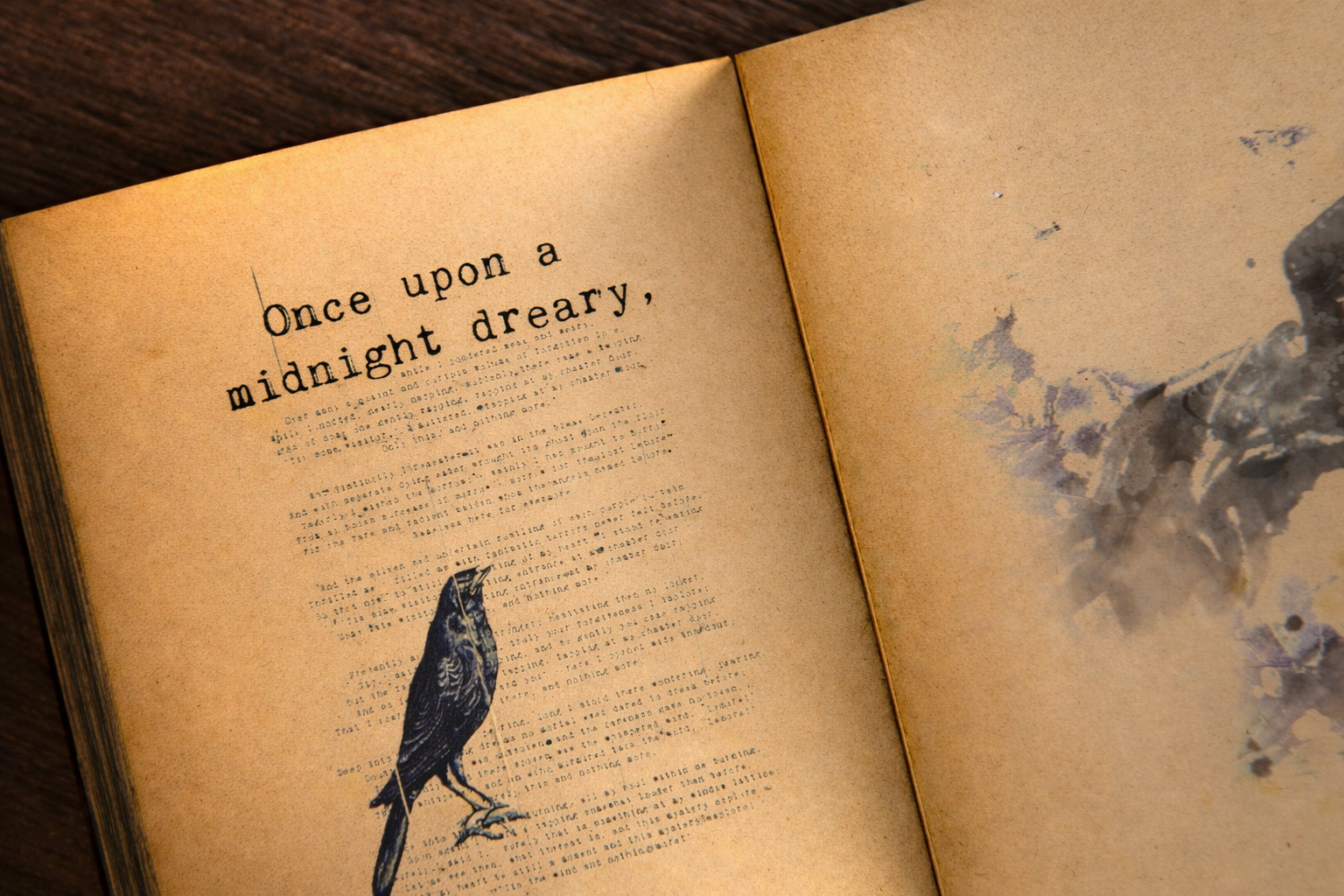
A 20-minute original film—story, screenplay, and score—based on the letters, poems, and works of Edgar Allan Poe. The inspiration comes from Poe’s letters, originally edited by J.W. Ostrom, which reveal the connection between his life, mental and physical health, and his works.
Utilizing passages from his letters and selected poems—including Alone, Serenade, Evening Star, The Lake, To One in Paradise, To Helen, Tamerlane, A Dream Within a Dream, To Margaret, and The Raven—this short film weaves together an original and dramatic story inspired by both his life and his timeless works.
His poems, like his letters, are a way to see the real Poe—a fragile, changeable man who created his poems like a piece of music. The word choice, rhythm, sound and silence, rhyme, and melodic flow are all elements in his works as they are in a musical composition. E.A. Poe, an American original, continues to inspire.